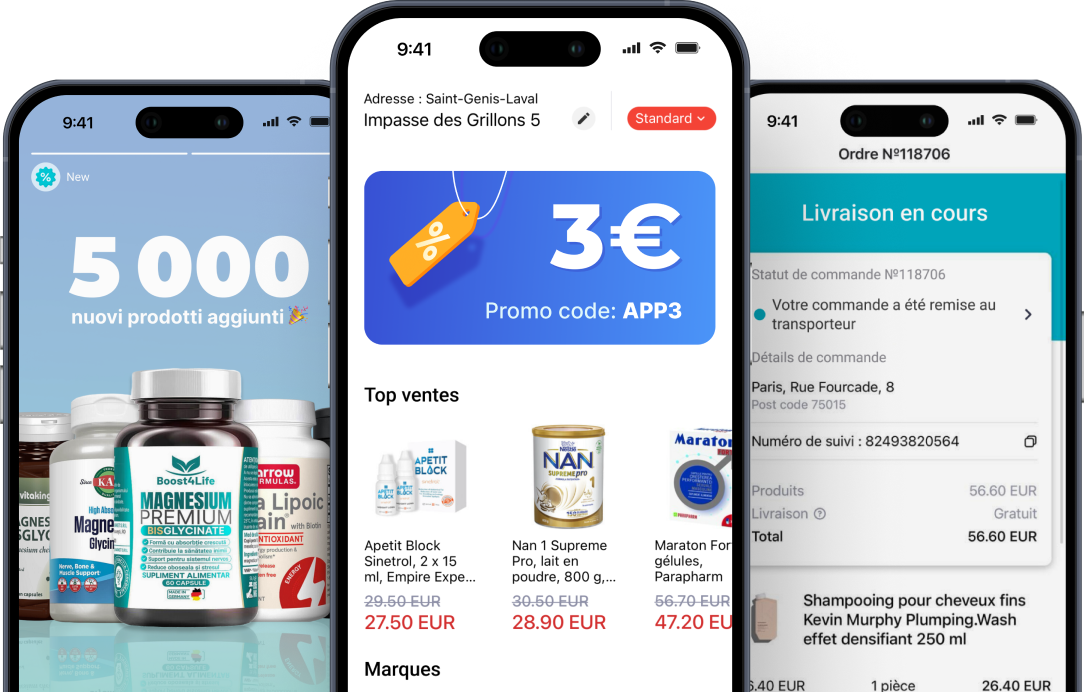
Promo code APP3 – € 3 discount on your first order in app
  Free delivery for orders over € 49
Paralen

Out of stock











Description Paralen
The information in the FAQ section was created by the Liki24.fr team and is based on the official manufacturer's manual
Paralen is a complex analgesic and antipyretic medicine, frequently used in the symptomatic treatment of colds and flu. The formulas in the Paralen Grip range contain combinations of active substances such as paracetamol, phenylephrine hydrochloride, caffeine and, in some variants, dextromethorphan hydrobromide, with a broad therapeutic spectrum covering fever, headache, muscle pain, nasal obstruction and dry cough.
Forms of release
Paralen Sanofi is available in the form of film-coated tablets, sachets, oral suspension or suppositories.
ParalenGrip (Paracetamol 500 mg + Caffeine 25 mg + Phenylephrine 5 mg) relieves cold and flu symptoms associated with fever, muscle aches, sore throat and nasal congestion.
ParalenGrip Flu and Cough (Paracetamol 500 mg + Dextromethorphan Hydrobromide 15 mg + Phenylephrine Hydrochloride 5 mg) is intended for respiratory conditions accompanied by dry cough and throat irritation.
Indications for use
Sanofi Paralen is indicated for the symptomatic relief of acute respiratory infections, such as colds and flu, manifested by:
- fever, chills;
- headache and sinus pain;
- sore throat;
- nasal congestion and obstruction;
- muscle and joint pain;
- dry and irritating cough (in the formula with dextromethorphan).
Paralen Grip is intended for adults and adolescents over 12 years of age. For younger children, other paracetamol-based preparations are available that are adapted to their age and body weight.
Dosage
The dosage varies depending on the patient's body weight and age.
For Paralen Flu and Cough, the dosage is as follows:
- Adults and adolescents over 15 years of age: 1–2 tablets as needed, up to 4 times a day;
- Adolescents 12–15 years old (>40 kg): 1 tablet every 4–6 hours, maximum 6 tablets/day.
Treatment should not exceed 7 consecutive days without medical advice, and if symptoms persist for more than 3 days, clinical re-evaluation is necessary.
Contraindications
Paralen Grip is contraindicated in the following situations:
- hypersensitivity to paracetamol, caffeine, phenylephrine, dextromethorphan or other excipients;
- severe hypertension, serious heart disease;
- uncontrolled diabetes mellitus;
- severe hepatic or renal insufficiency;
- hyperthyroidism, angle-closure glaucoma, prostate adenoma with urinary retention.
- pheochromocytoma
Special instructions for use
Patients with liver, kidney, cardiovascular or metabolic disorders should seek medical advice before use.
Concomitant use with other products containing paracetamol, decongestants or stimulants should be avoided.
Side effects
Although Paralen is generally well tolerated, the following side effects may occur:
- Common: headache, dizziness, nervousness, insomnia, anxiety, irritability
- Rare: nausea, vomiting
- Very rare: haematological disorders (leucopenia, thrombocytopenia), allergic skin reactions, liver damage, arrhythmias, hypertension
In case of hypersensitivity reactions (urticaria, facial oedema, breathing difficulties), administration should be discontinued immediately and emergency medical assistance is recommended.
Interactions with other medicines and food
Paralen interacts with numerous medicines, the most important of which are:
- MAOIs and tricyclic antidepressants – may cause hypertensive crises;
- warfarin and other coumarin anticoagulants – increase the risk of bleeding;
- antiepileptics (phenytoin, carbamazepine, phenobarbital) – reduce the effect of paracetamol and increase the risk of liver toxicity;
- rifampicin, isoniazid, zidovudine – increase the risk of liver damage;
- ergotamine and metisergide – may accentuate phenylephrine-induced vasoconstriction;
Alcohol consumption should be avoided completely. It is also recommended to reduce caffeine intake from other sources (coffee, tea, energy drinks) to prevent insomnia and tachycardia.
Overdose
Overdose is a medical emergency. Ingestion of a large dose of Paralen, even accidentally, can cause severe hepatotoxicity. Initial symptoms may include nausea, vomiting, abdominal pain, sweating, followed by increased liver enzymes and liver failure.
Treatment consists of administering N-acetylcysteine as soon as possible, preferably within the first 8–10 hours after ingestion, under medical supervision.
Storage conditions
Store at temperatures below 25°C, away from light and moisture. Keep out of the reach of children. Do not use after the expiry date stated on the package. Unused medicines should be disposed of according to the pharmacist's instructions to protect the environment.